
Today's expected range for the Canadian Dollar against the major currencies:
US Dollar 1.3680-1.3930
Euro 1.6050-1.6300
Sterling 1.8400-1.8650
WTI Oil (opening level) $59.68
The CAD/USD is opening at 1.3809 ( 0.7242 )
USD/CAD pair manage to hold above the 1.3800 mark as traders await the release of the US Personal Consumption Expenditure Price Index before placing fresh directional bets.
From a technical perspective, the overnight break below the 200-period Exponential Moving Average on the 4-hour chart and the lack of any buying favors the USD/CAD bears. With spot prices still under the 200-period EMA, rebounds would be capped at the average unless bulls reclaim it decisively. A recovery above the average would ease downside pressure.
The 38.2% Fibo. level at 1.3822 offers initial support; a close beneath it could open the 50% Fibo. level at 1.3787.
Headlines
• The geopolitical temperature cooled after Trump abandoned his tariff threat against European countries, while announcing a framework agreement with NATO Secretary General Mark Rutte regarding Greenland, thus forgoing punitive tariffs on European nations. Earlier, at the World Economic Forum in Davos, he stated he wouldn't pursue acquiring Greenland by force, while Denmark still rejected Trump's request to negotiate a US takeover of Greenland.
• Australia Dec. Employment change was in at +65.2k vs. +27 expected and the unemployment rate for the month dropped to 4.1% vs. 4.3% expected. This sent short Australian rates rising sharply in greater anticipation of a rate hike from the RBA as soon as their next meeting on February.
• US pending home sales dropped 9.3% in December 2025, the largest decline since April 2020, and ended a four-month gain streak. All regions fell, notably the Midwest (-14.9%) and West (-13.3%), with a 3.0% year-over-year decrease. NAR Economist Lawrence Yun cited low inventory and hesitant buyers as factors.
• Canada's producer prices fell 0.6% MoM, with decreases in energy and petroleum prices contributing to the steepest drop in seven months. Lumber prices also fell, while non-ferrous metal prices rose. In December 2025, year-on-year producer prices increased 4.9%, down from November's 5.9%.
• Japan's trade surplus decreased to JPY 105.7 billion, missing the expected JPY 357 billion. In December 2025, exports grew 5.1% year-on-year to JPY 10,411.5 billion, while imports rose 5.3% to JPY 10,305.8 billion, reflecting strong year-end demand.
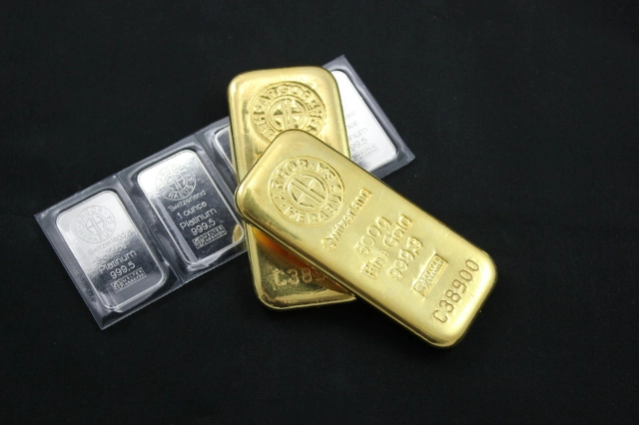
Gold and platinum continue to command attention after yesterday’s record-setting rally. Gold remains firmly supported by central-bank buying, lingering concerns over global bond stability, and persistent geopolitical uncertainty, reinforcing its role as the market’s primary safe-haven asset. Platinum’s surge reflects tightening supply conditions and renewed industrial demand, particularly from the automotive and clean-energy sectors. While silver has paused after its recent advance, both gold and platinum suggest that defensive positioning remains deeply embedded in global portfolios, even as broader risk appetite shows tentative signs of recovery.
Key Points
• Equities: Wall Street bounced hard; Europe steadied after early jitters; Asia was mixed as Hong Kong tech rebounded.
• Volatility: VIX lower, near-term stress fades, headline risk persists
• Digital assets: Bitcoin near $90k, Ethereum steady, crypto lagging equities
• Currencies: USD rebounds on easing US-Europe tariff worries, AUD strongest after robust jobs report.
• Commodities: Gold’s haven status holds firm while heating demand drives diesel and natural gas sharply higher
• Fixed Income: Japanese government bonds rally sharply again. US treasuries rallied modestly as well.